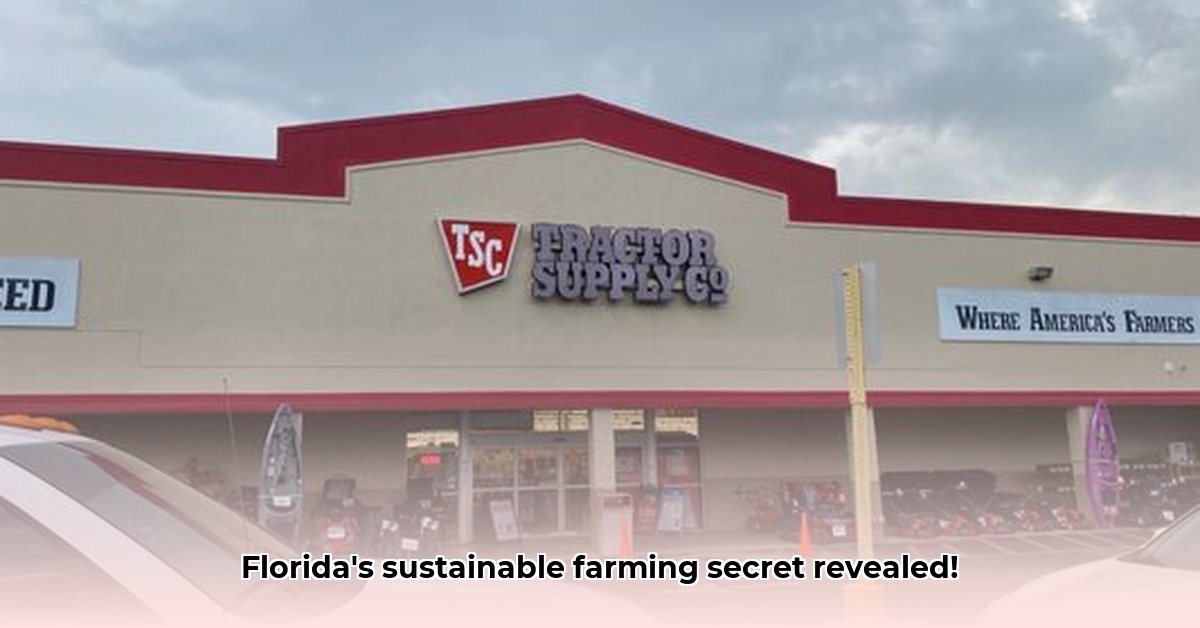
Tractor Supply Brooksville: A Hub for Sustainable Farming in Florida
Tractor Supply in Brooksville, Florida, serves as a significant resource for local farmers and gardeners pursuing sustainable agricultural practices. This article explores its role in supporting sustainable agriculture, examining both its contributions and limitations. We will analyze its product offerings, supply chain practices, and community engagement, offering actionable steps for maximizing its use while promoting broader sustainability initiatives. How can we ensure Tractor Supply effectively supports the growing demand for sustainable and ethical farming practices in Brooksville? For similar operations elsewhere, see this example.
Tractor Supply's Impact on Brooksville's Agricultural Ecosystem
Tractor Supply acts as a central distribution point for a wide variety of agricultural inputs, impacting the local farming community significantly. From animal feed and fencing to seeds and tools, its inventory influences the types of crops grown, livestock raised, and overall farming practices employed in the region. However, merely providing a broad range of products doesn't automatically equate to sustainable practices. We must critically assess their sourcing and operational methods. What percentage of their product lines reflect sustainable practices?
Assessing Tractor Supply's Sustainability Efforts
A holistic appraisal of Tractor Supply's sustainability involves examining multiple aspects. Their supply chain transparency—the origin and production methods of their products—is crucial. Are suppliers adhering to sustainable farming principles? What are their packaging and waste management strategies? How energy-efficient are their operations, and what efforts are underway to reduce their carbon footprint? These questions are vital for understanding their overall environmental impact. Beyond environmental considerations, community engagement is equally important. Does Tractor Supply actively support local farmers and ranchers? Do they participate in any initiatives promoting local food security or sustainable agriculture?
Actionable Steps for a Greener Brooksville Agriculture
Active participation is key to building a more sustainable future for Brooksville's agricultural sector. Here's a strategy combining short-term and long-term goals:
Short-Term Goals (Within One Year):
Conduct a Sustainability Audit: A comprehensive audit of Tractor Supply's Brooksville branch, assessing its supply chains, energy consumption, waste management, and overall environmental footprint, would provide crucial data for informed decision-making. Results should be publicly available. Does this transparency exist currently?
Advocate for Sustainable Product Selection: Local farmers and gardeners should directly request more sustainable product lines. Providing Tractor Supply with specific product suggestions and brand recommendations known for sustainable sourcing will amplify the demand for greener options.
Enhance Community Engagement: Support local farms and businesses prioritizing sustainable practices by actively purchasing their products. Choosing locally sourced items reduces transportation-related emissions and strengthens the local economy – a crucial aspect of sustainable development.
Long-Term Goals (Over Three to Five Years):
Develop a Formal Sustainability Plan: Tractor Supply should formalize its commitment to sustainable agriculture through a comprehensive plan outlining strategies for sustainable sourcing, expanding eco-friendly products, and collaborative partnerships with local organizations. This plan requires transparency and demonstrable progress.
Expand Advocacy Efforts: Sustained advocacy for a greater selection of organic and sustainably produced goods at Tractor Supply is essential, requiring collaboration among farmers, gardeners, and community members.
Promote Community-Based Initiatives: Support and participate in community-led initiatives fostering sustainable agriculture, including workshops, educational programs, and collaborative projects. Working with local governments to implement supportive policies could further enhance efforts.
Seek Local Governmental Support: Lobby local government for incentives (tax breaks, grants) for farmers adopting sustainable practices. This would directly support the transition to more environmentally friendly operations in the region.
Addressing Challenges and Mitigating Risks
The transition to sustainable agriculture faces challenges. Let's examine some key risks and mitigation strategies:
| Risk Factor | Likelihood | Impact | Mitigation Strategy |
|---|---|---|---|
| Reliance on Unsustainable Suppliers | High | High | Implement stricter supplier vetting and prioritize partnerships with certified sustainable producers. |
| Limited Availability of Sustainable Products | Medium | Medium | Collaborate with Tractor Supply and suppliers to expand the range of eco-friendly options. |
| Consumer Preference for Cheaper Products | Medium | Low | Educate consumers on long-term benefits of sustainable choices through marketing and community outreach. |
| Changing Regulations | Low | Medium | Stay updated on relevant regulations and proactively adapt business operations to comply. |
Conclusion: A Shared Responsibility for Sustainable Agriculture
Achieving a truly sustainable agricultural system in Brooksville necessitates a collective effort. Tractor Supply plays a crucial role, but its success depends on transparency, a strong commitment to sustainable practices, and the active involvement of the entire community. Continuous dialogue, ongoing research, and collective community action are paramount for long-term success. What steps can you take today to contribute to a more sustainable future for Brooksville’s agricultural landscape?